


Cassava Residue Dewatering Machine helps solve a common headache for cassava starch manufacturers. Vietnam is one of the biggest cassava starch producers in the world, and its factories face the same problem every other starch plant faces: what to do with the wet residue. In one Vietnamese starch plant, the answer is now a running production line with this dewatering equipment, and the customer is satisfied with what it delivers.
The Situation
The plant extracts starch from fresh cassava roots. The residue coming off the extraction line is wet, heavy, and around 85% moisture. At that level it is difficult to handle. It piles up, it starts to ferment, and it takes up space that the plant does not have. Transporting it away is expensive because most of what you are moving is water.
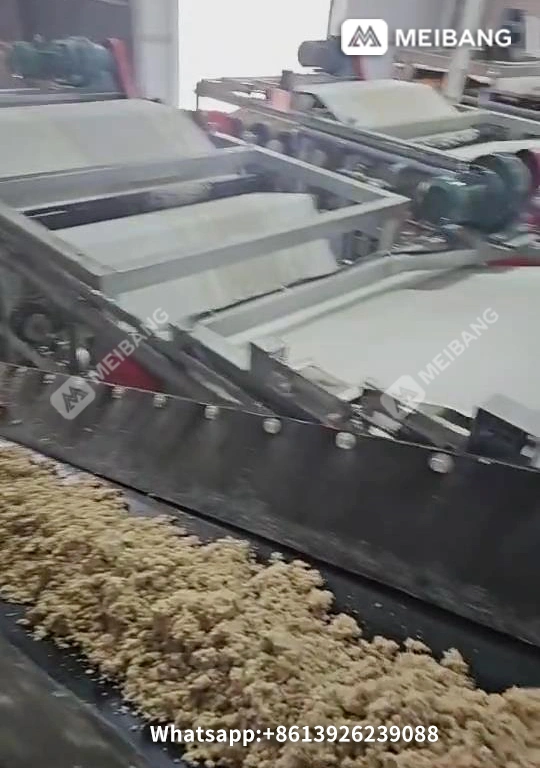
The plant needed a system that could run continuously alongside starch production, not a batch process that needed constant attention. Labor in the region is available but not unlimited, and a line that needs an operator watching every step is a line that stops when that operator is not there.
What Was Installed
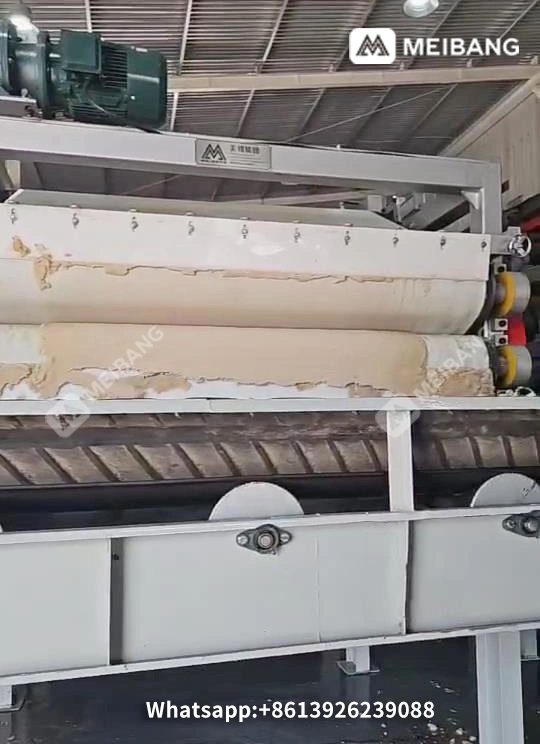
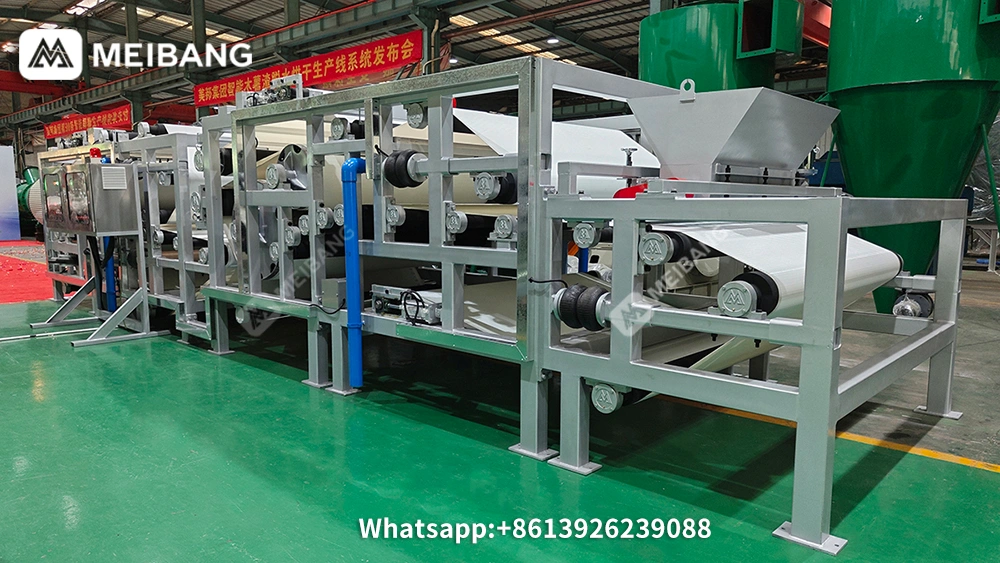
The plant installed a Cassava Residue Dewatering line built around a Cassava Pulp Dewatering Machine. The core of the machine is a double-head high-efficiency press that squeezes free water out of the pulp. Moisture drops from around 85% down to a low level after pressing, which is the key result for the customer. The drier the output from this stage, the less work the downstream equipment has to do, and the less fuel is burned later.
The line runs automatically. Feed is continuous, the press operates at steady pressure, and the discharge is consistent. Operators check the line rather than operate it. For a plant running shifts around the clock, that matters as much as the moisture number.
Why the Customer Approves
Three things came up repeatedly when the customer talked about the line:
- Production efficiency. The line keeps up with the starch extraction side. Residue does not back up, and the plant does not have to slow down starch production because the residue handling cannot keep pace.
- Low moisture after dewatering. The pressed residue comes out dry enough to be manageable and to reduce the load on any further drying step. This is the number the customer watches, and it meets expectations.
- Automatic operation. The line runs with minimal manual intervention. That reduces labor cost and, more importantly, reduces the variation you get when different operators run equipment differently.
What Comes Next in the Process
Dewatering is the first step, not the whole story. For plants that want to go further, the dewatered pulp can go into a Cassava Residue Dryer to bring moisture down to a stable, storable level. A complete Cassava Dregs Processing Line typically adds crushing between drying passes so the material dries evenly, plus dust collection for safety.
Some plants stop at dewatering because their local market accepts partially dried residue. Others add the Cassava Residue Drying System and sell a fully dried product into feed, fertilizer, biomass fuel, or cat litter raw material markets. The right choice depends on local buyers and local energy costs. A Low Energy Cassava Dryer makes the second option more attractive because the operating cost per ton stays low.
What This Case Shows
The Vietnamese installation is a useful reference for other starch plants in the region and beyond. It shows that an automated Cassava Pulp Dewatering Machine can run at production scale, keep pace with starch extraction, and deliver low moisture after pressing, with a customer who is satisfied enough to say so.
If you are dealing with wet cassava residue, the starting point is the same everywhere: get the water out mechanically before you spend money on heat. A properly sized dewatering press does most of the work, and everything downstream gets easier.