


Cassava is a lifeline crop for millions of farmers and processors across Southeast Asia and Africa. It is hardy, high-yielding, and supports food security and rural incomes. But the cassava industry has a long-standing inefficiency: the residue left after starch and flour extraction is often treated as garbage.
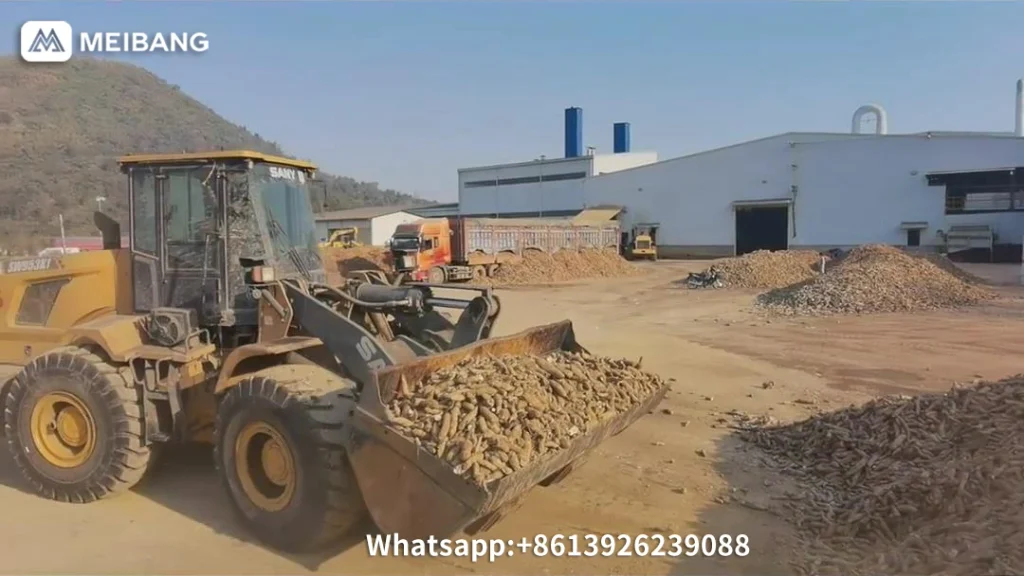
In many processing areas, wet cassava pulp is dumped on unused land. It takes up space, breeds flies, smells bad, and can seep into waterways. At the same time, factories pay for disposal and lose a potential revenue source. This low-efficiency, rough handling model has become a core pain point for the industry’s move toward higher value and finer processing.
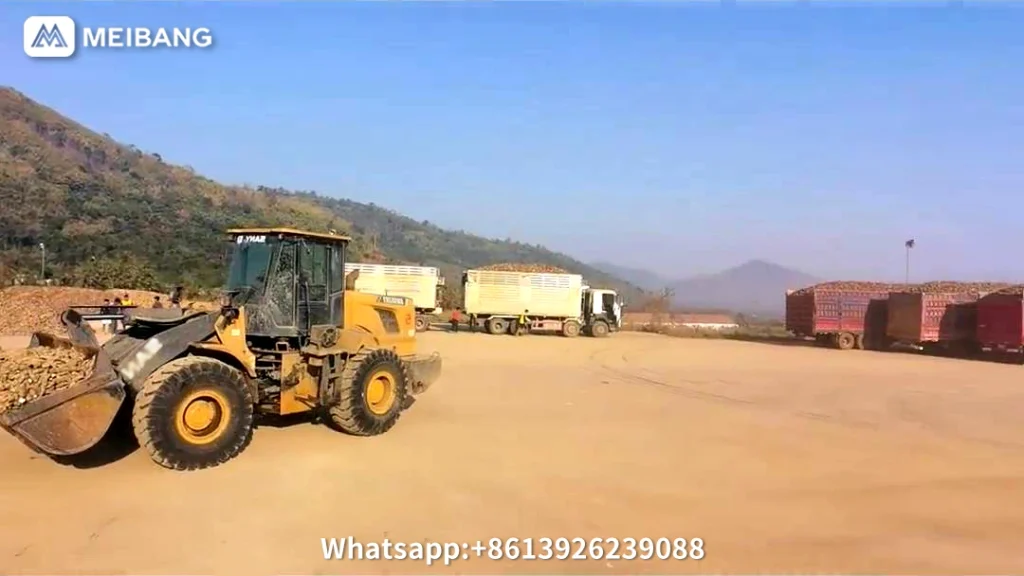
Meibang Group set out to change this. Drawing on experience in agricultural processing equipment, the company developed a smart cassava residue dewatering and drying production line that addresses the problem at its source.
Built from three smart parts
The Cassava Dregs Processing Line is made up of a Cassava Pulp Dewatering Machine, a Cassava Residue Dryer, and a dust collection system. Each part plays a clear role.
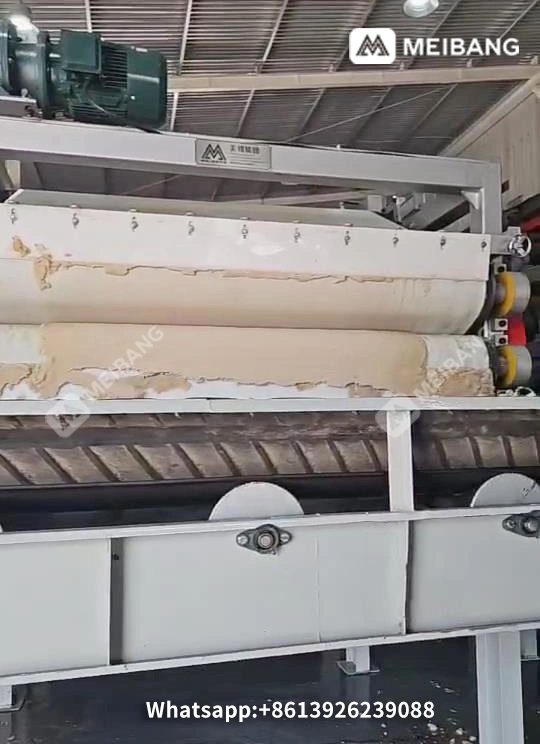
The dewatering machine is the first step. Wet pulp goes in, and mechanical pressure squeezes out excess water. The Cassava Residue Dewatering process reduces moisture content significantly, making the material lighter and easier to handle. This step alone can cut transport and storage costs and reduce the load on the dryer.
The Cassava Pulp Drying Machine then takes over. Meibang’s dryer is engineered to be energy-efficient and to prevent scorching. The Low Energy Cassava Dryer design keeps fuel consumption in check, which is important for processors watching operating costs. Gentle, even drying preserves the nutritional quality of the residue, keeping it suitable for feed and other high-value uses.
Finally, the dust collection system captures airborne particles generated during drying and handling. This keeps the workshop cleaner, protects workers, and helps the plant meet environmental regulations. Together, the three components form a complete Cassava Residue Drying System that runs reliably from start to finish.
Value that doubles—and multiplies
The most direct benefit is financial. Dried cassava residue sells for roughly twice the price of wet pulp. But the real advantage is the range of markets it can serve.
High-quality dried cassava residue is used in animal feed production, where it provides energy and helps reduce feed costs. It is used in alcohol distillation as a fermentation feedstock. It can be processed into cat litter, valued for its absorbency and biodegradability. It works as a raw material for organic fertilizer, returning nutrients to farmland. And it can be densified into biomass fuel, supporting renewable energy goals.
This versatility means processors are not locked into one buyer or one market. They can diversify their revenue and stabilize income across seasons. It also extends the cassava value chain, turning a disposal problem into a product line.
Environmental and operational gains
Beyond profit, the smart cassava residue dewatering and drying line delivers environmental benefits. Less residue is dumped, so pollution risks drop. Dust is captured rather than released. Energy use is optimized through the Low Energy Cassava Dryer design. For processors seeking to improve their environmental footprint, this is a meaningful step.
Operationally, the line is designed for ease of use and continuous operation. It fits into existing cassava processing workflows and can be scaled to different plant sizes. Meibang provides installation guidance and after-sales support to help processors get up to speed quickly.
A catalyst for industry upgrade
The smart cassava residue dewatering and drying line is more than a piece of equipment. It is a catalyst for change in the cassava processing industry. It shows that residue can be a resource, that waste handling can be profitable, and that cassava processing can move toward smarter, greener, and higher-value operations.
Meibang Group remains focused on industry pain points and continues to invest in R&D. By refining its Cassava Pulp Dewatering Machine, Cassava Residue Dryer, and supporting services, the company aims to empower upstream and downstream businesses to upgrade together. For cassava processors in Southeast Asia, Africa, and beyond, this is a practical route to better efficiency, cleaner production, and stronger returns—and a step toward a more circular, sustainable agricultural economy.