


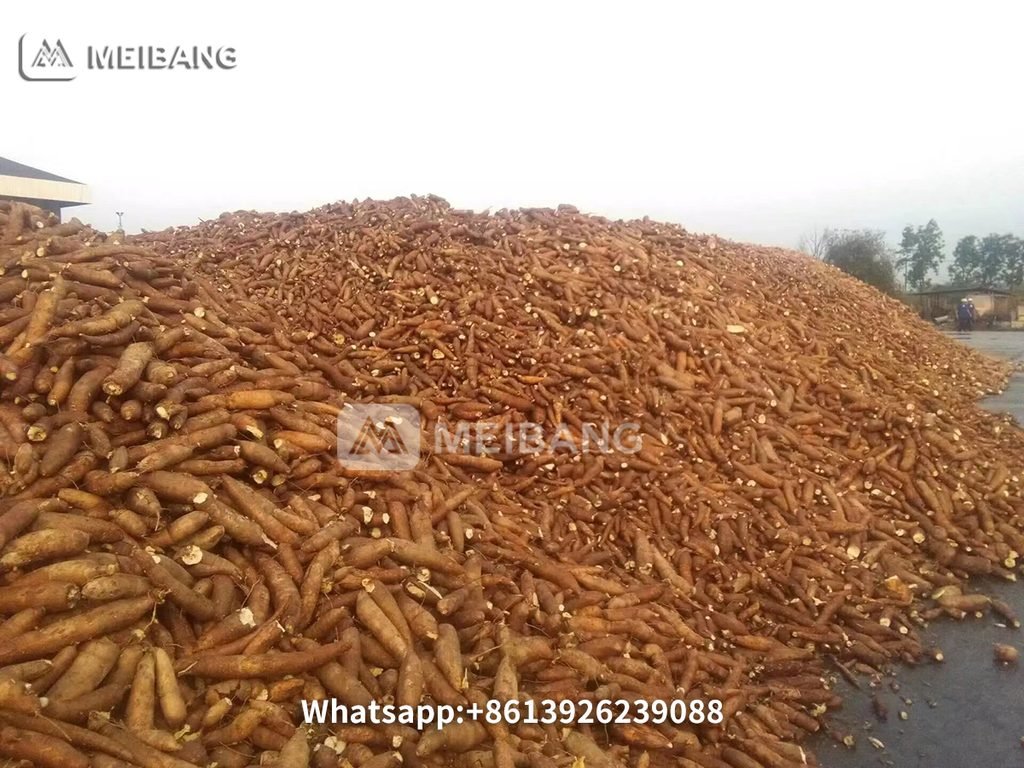
For cassava starch factories and agricultural processing businesses, wet cassava pulp represents both a handling challenge and a potential source of additional income. Its high water content increases transportation weight and can make storage and downstream processing more expensive.
Installing an efficient cassava pulp dewatering machine can help businesses address these challenges while improving the commercial value of their processing by-products.
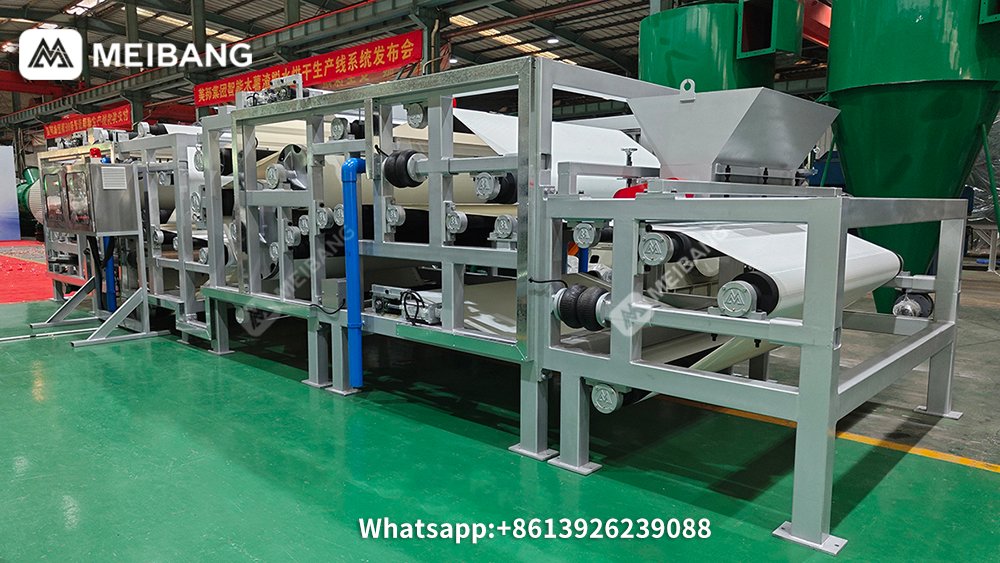
Meibang Group’s belt-and-roller press dewatering machine is designed to remove excess water from wet cassava pulp through mechanical pressing. With its continuous processing design, convenient operation, and suitability for high-volume applications, it offers a practical option for companies seeking to improve production efficiency.
High Capacity Helps Keep Production Moving
When a factory generates large amounts of cassava residue every day, processing capacity becomes essential. Equipment that cannot keep up with production may create material accumulation and increase handling costs.
A belt press dewatering machine supports continuous processing, helping factories manage wet cassava pulp more efficiently. Its belt-and-roller pressing mechanism separates water from the solid material without requiring operators to rely entirely on manual methods.
The appropriate machine should be selected according to the factory’s hourly throughput, raw material characteristics, and required final moisture content. Confirming these details before purchasing helps ensure that the equipment fits the actual production line.
Easy Operation for Everyday Industrial Use
Simple, convenient operation can make a significant difference in daily production management.
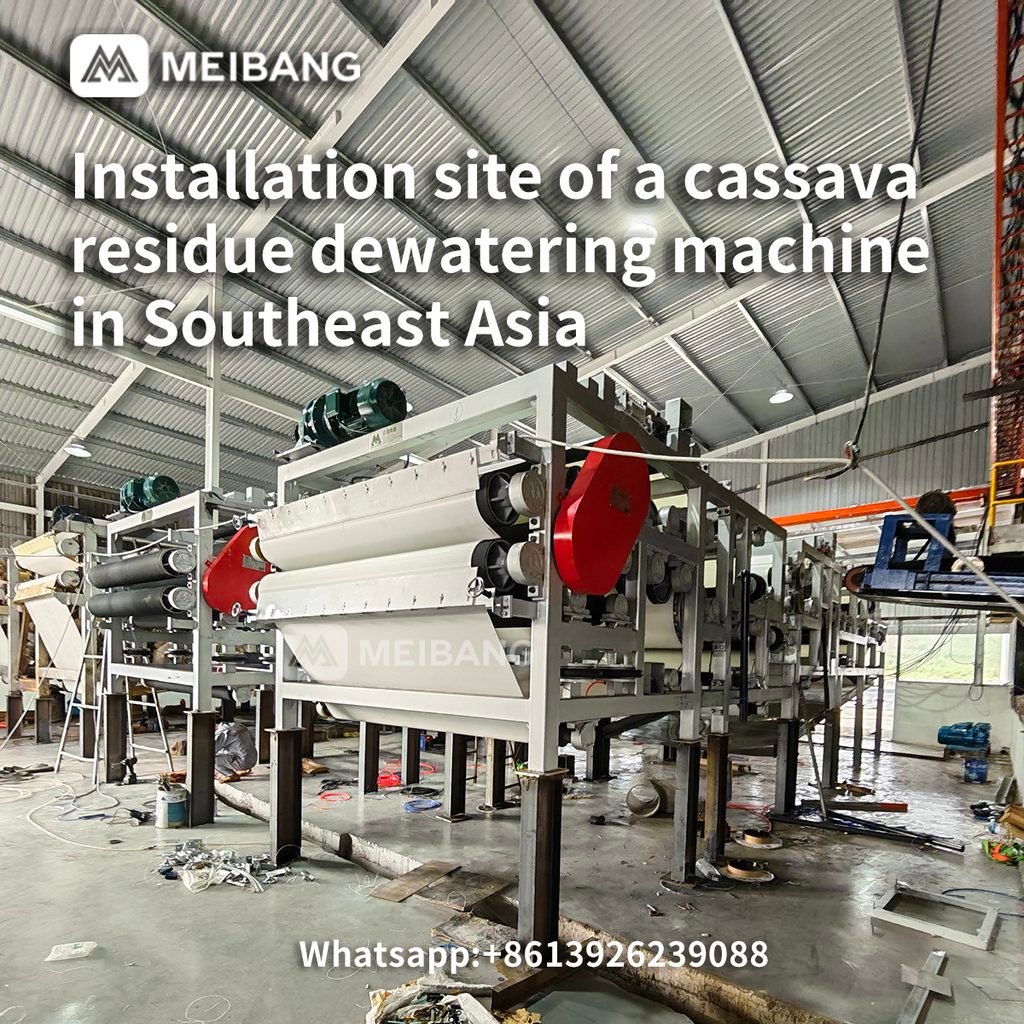
Meibang’s mechanical dewatering solution is designed to streamline the process of feeding, pressing, draining, and discharging cassava pulp. With proper installation, operator training, and routine maintenance, the equipment can become an important part of an organized residue processing line.
Regular belt cleaning, inspection of pressing components, and appropriate maintenance are important for reliable performance. Businesses should also evaluate the availability of replacement parts and after-sales technical support when selecting industrial machinery.
Reduce Transportation and Drying Costs
One of the main economic advantages of dewatering is the removal of water before transportation or further processing.
When wet cassava pulp is mechanically dewatered, its weight and moisture content can be reduced. This may lower transportation costs when charges depend on transported weight, improve handling efficiency, and reduce the amount of water that subsequent drying equipment needs to remove.
The belt press does not necessarily eliminate the need for a dryer. Instead, it performs mechanical water separation before any additional drying required by the final product.
The overall cost savings depend on the quantity processed, initial moisture level, achieved dewatering performance, transport distance, energy prices, and downstream production requirements.
Create Multiple Revenue Opportunities
Dewatered cassava pulp may be used as an intermediate raw material for different industries, depending on its quality and further processing requirements.
Animal feed: Suitable cassava pulp can be incorporated into feed formulations following appropriate nutritional assessment and processing.
Organic fertilizer: Cassava residue can be processed with other organic materials for composting and fertilizer production.
Biomass pellet fuel: After sufficient drying and conditioning, cassava pulp may be used in biomass fuel manufacturing.
Cat litter: Certain formulations may use processed plant-based residue, subject to product performance requirements and testing.
These applications give cassava processors more options for using by-products rather than treating all residue as waste. However, actual profitability depends on product quality, processing costs, regulatory compliance, and demand from local buyers.
How Can a Belt Press Help Recover Investment Faster?
A successful investment in dewatering equipment depends on the relationship between processing costs and the value created.
Businesses can evaluate the potential return by comparing the cost of equipment installation and operation with the expected benefits, including reduced transportation expenses, lower downstream drying costs, reduced manual handling, and revenue from usable cassava residue.
For example, a factory processing a large volume of wet cassava pulp may benefit from reducing the water content before sending the material to another facility. If the resulting savings and additional product revenue exceed the operating expenses, the machine can contribute to improved profitability.
There is no universal payback period because raw material conditions, local energy prices, equipment investment, and product selling prices vary. A practical feasibility study using real production data is the best way to estimate investment recovery.
Meibang Group: Cassava Dewatering Equipment for Global Markets
Two Meibang cassava pulp dewatering machines have been shipped to Guangxi, China. Meibang Group’s cassava residue dewatering equipment is also used in China, Thailand, Vietnam, Indonesia, Nigeria, and other countries, receiving positive customer feedback.
For cassava processing businesses that need high processing capacity, convenient operation, and improved by-product utilization, Meibang’s belt-and-roller press offers a practical industrial solution.
Contact Meibang Group to discuss your processing volume, raw material moisture content, target output, and expected applications. The right equipment configuration can help you improve efficiency, manage operating costs, and explore new revenue opportunities from cassava pulp.