


Cassava pulp is one of the main by-products of starch and alcohol production. In its fresh state, it carries around 80% moisture, which makes it sticky, heavy, and difficult to handle. For many factories, this wet residue is a headache: it spoils quickly, smells bad, and is expensive to dispose of. Drying it sounds simple, but in practice, traditional dryers struggle badly with this material.
The core problem is the combination of high water content and high viscosity. When conventional drying equipment runs at high temperature, the starch on the surface of the pulp gelatinizes. This chemical change creates a layer of dextrin that blocks the pores of the material. Water inside the particles can no longer escape, and the surface turns yellow-black while the inside stays soft and wet. The result is the well-known “burnt outside, raw inside” problem, and the dried residue has almost no market value. When the temperature is lowered to avoid this, the moisture simply cannot be brought down below 12%, which is the threshold for safe storage and sale. On top of that, wet cassava dregs stick to the dryer wall, form lumps, and clog the machine, forcing frequent shutdowns for cleaning. Customers lose production time and money.
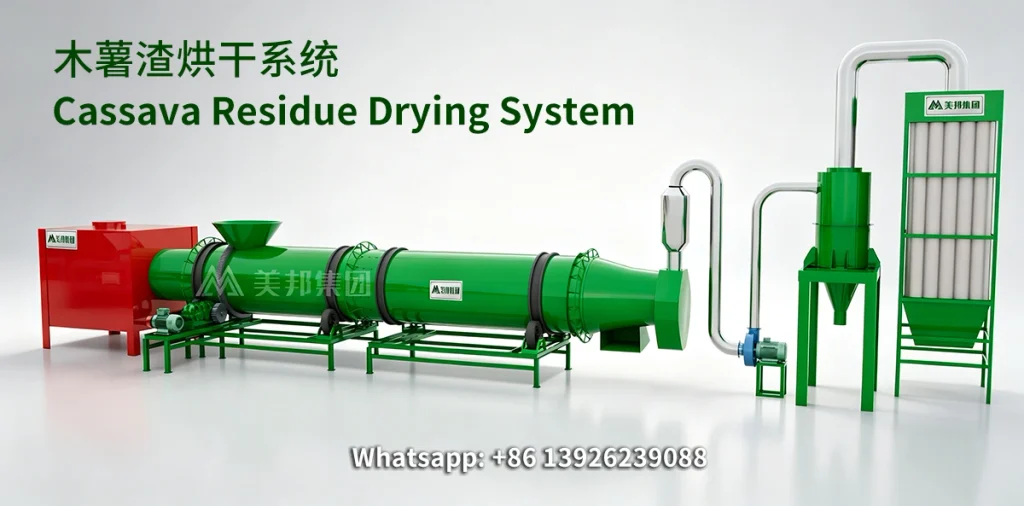
The solution is a complete Cassava Dregs Processing Line built around the specific behavior of this material. The process combines three stages: dewatering, drum drying, and dust removal. First, Cassava Residue Dewatering removes a large share of the free water mechanically, so the dryer does not have to evaporate it with fuel. This step alone cuts energy demand significantly. The dewatered pulp then enters a Cassava Residue Dryer designed with a three-pass drum and an internal breaking and lifting structure. Multiple breaking devices inside the drum scatter the sticky material quickly, preventing it from sticking to the wall and ensuring full contact with hot air. The final product is loose, dry, and uniform in color, with moisture reliably reduced to 12% or below.
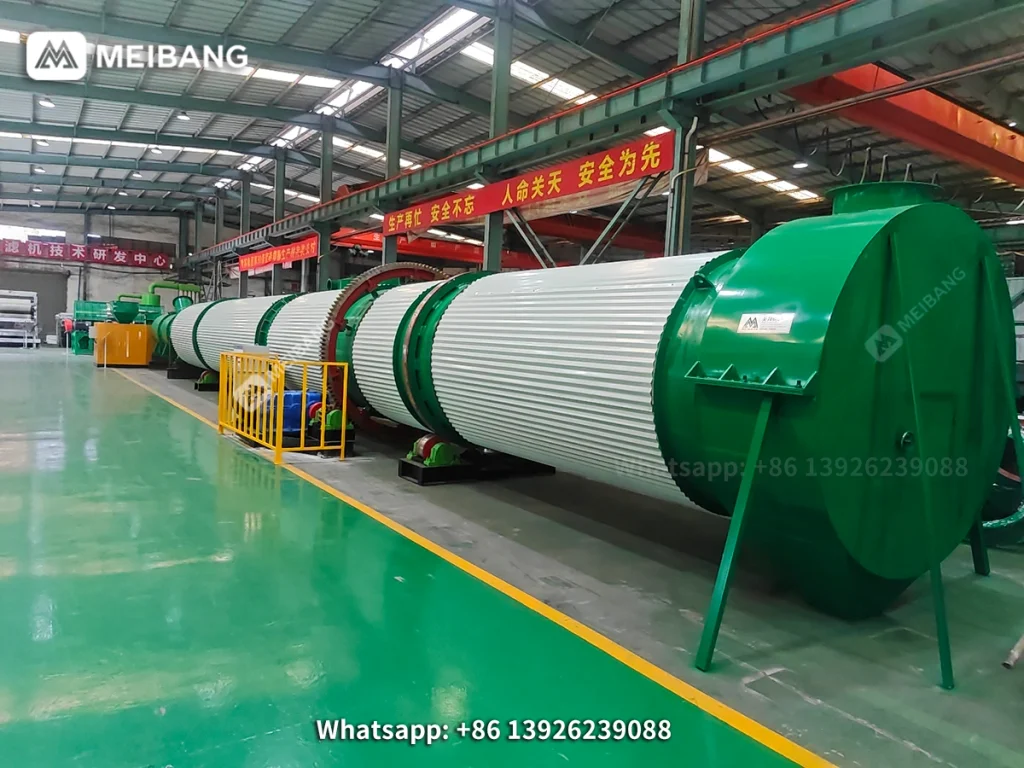
Energy efficiency is a major advantage. The Low Energy Cassava Dryer uses a thickened aluminum silicate insulation layer and a sealed design to prevent heat loss, raising the overall thermal efficiency of the unit. It accepts multiple heat sources, including natural gas, biomass fuel, and coal, so customers can choose the cheapest local option and shorten the payback period. A PLC-based intelligent control system runs the whole line automatically with only one or two operators on duty. It adjusts hot air temperature and exhaust flow in real time, which prevents both over-drying (wasted fuel) and under-drying (poor quality).
The dried cassava residue has real value. It can be used as a high-protein feed ingredient for cattle, sheep, and poultry, or pressed into biomass pellets for fuel. Starch plants can turn a waste disposal cost into an income stream. Alcohol plants can dry mixed residue and burn the pellets in their own boilers, cutting fuel purchases. Feed mills can replace part of the corn bran in their formulas, and biomass energy plants can collect scattered agricultural residue, dry it, and pelletize it for export. The machine is also compatible with sweet potato residue, potato pulp, fruit pomace, distillers’ grains, and bagasse.
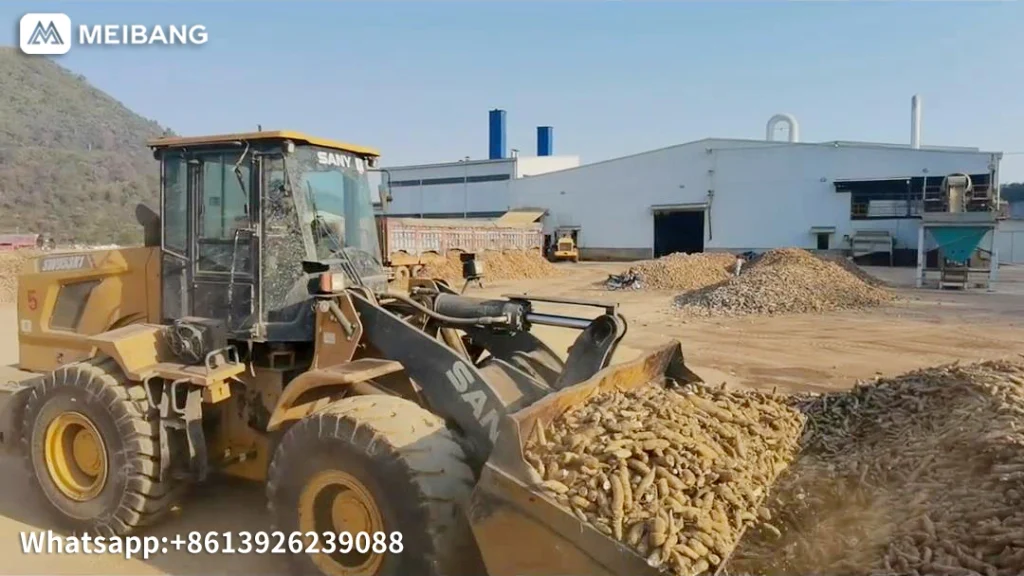
For factories dealing with fresh cassava pulp, a properly designed Cassava Residue Drying System is no longer optional. It is the difference between paying to haul away waste and producing a sellable product. With the right dewatering and drying combination, cassava residue stops being a burden and becomes part of the deep-processing value chain.