


Buying cassava residue processing equipment is not complicated, but it is easy to get wrong. Most mistakes come from buying one machine instead of a line, or from trusting a moisture number that was measured under conditions that do not match your plant.
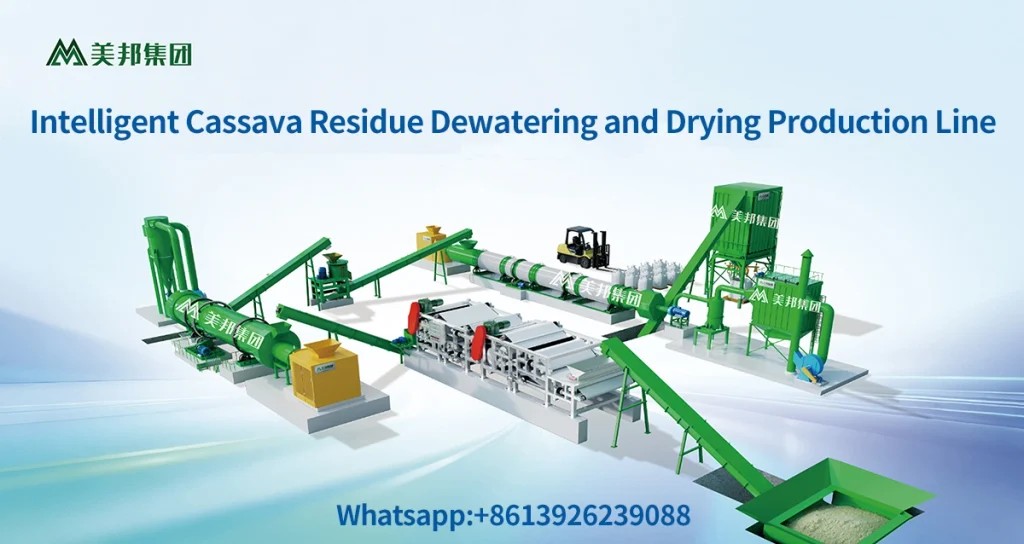
This guide walks through what a Cassava Dregs Processing Line actually does and what to check before you spend money.
Why Dewater First
Fresh cassava pulp is roughly 85% water. Water is heavy, and water is what makes the pulp rot. The cheapest way to remove water is not heat, it is pressure.
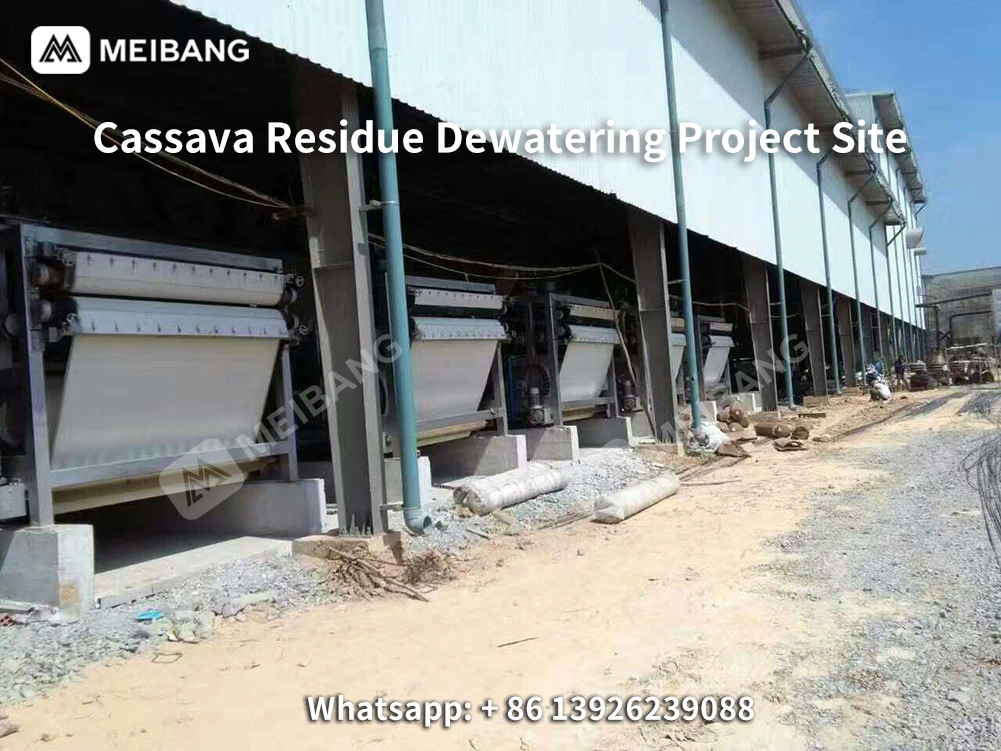
A Cassava Pulp Dewatering Machine uses a double-head high-efficiency press to bring moisture down to about 65%. Every percent of water you remove mechanically is a percent you do not pay to evaporate later. In practice, the dewatering step is where most of the operating cost savings come from.
When you compare suppliers, ask about pressure, throughput, and how the machine handles the fine starch particles that come with cassava pulp. Fine particles can squeeze out with the water, so a good press has a way to manage that.
Why Two-Stage Drying
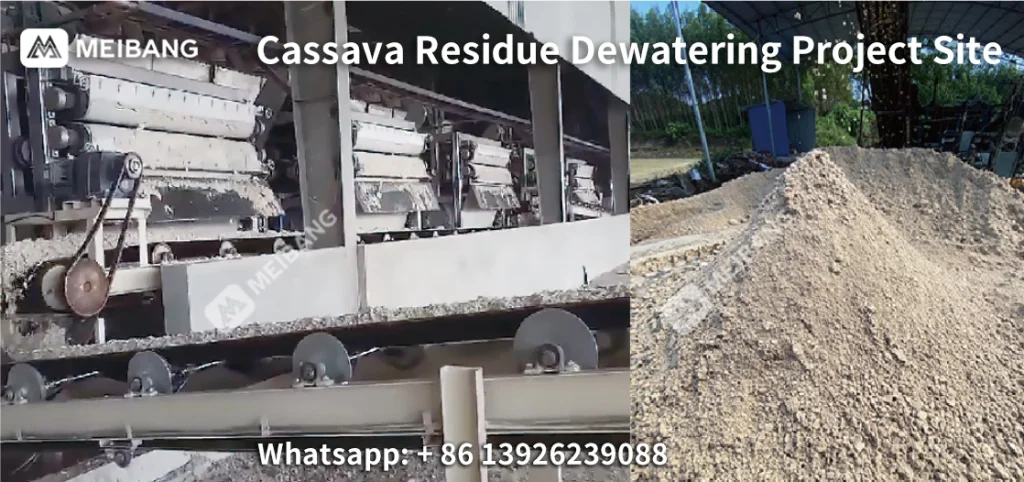
After dewatering, the pulp goes into a Cassava Pulp Drying Machine and is dried to about 50% moisture. Then it is crushed and scattered, and sent through the dryer again. The final product comes out below 20% moisture.
The two-stage approach exists for a reason. Cassava pulp is sticky when wet. If you try to dry it from 65% to 20% in a single pass, the outside of each lump dries into a hard shell while the inside stays wet. The result is inconsistent product that molds in storage.
Crushing between passes breaks those shells and exposes fresh wet surface. The second pass then finishes the job evenly.
Scorching and Fire Risk
Cassava residue is organic and fine. At high temperatures it can scorch, and scorched material is worthless. Worse, it can ignite. A properly designed Cassava Residue Dryer controls the drying air temperature and the material residence time so the residue dries without burning. Ask suppliers how they prevent local overheating, and ask what happens if feed stops suddenly.
Dust Explosion Protection
This is the part buyers skip, and it is the part that matters most. Dry organic dust, hot air, and a confined space are the classic conditions for a dust explosion. A complete Cassava Residue Drying System must include dust collection, grounding, and spark detection. Do not accept a line without it.
Energy: Where the Money Goes
Operating cost is dominated by the dryer. When you evaluate a Low Energy Cassava Dryer, compare:
- Energy used per ton of water evaporated
- Heat source (biomass, gas, oil, or waste heat from your plant)
- Insulation and heat recovery design
- Whether the dewatering step is doing its share of the work
A dryer that looks cheap but consumes more fuel per ton will cost more within a year or two.
Output and Market
Dried cassava residue below 20% moisture has several buyers: feed mills, organic fertilizer producers, biomass fuel users, and cat litter manufacturers. Before you buy, check which of these markets exists near you, and what moisture and particle size they require. Then specify the line to match.
A Simple Checklist
- Dewatering press sized to your daily residue volume
- Dryer with proven two-stage, crush-and-redry design
- Temperature control that prevents scorching
- Full dust collection and explosion protection
- Realistic energy figures for your moisture levels
- Spare parts and local service
Get these right and the line runs quietly for years. Get them wrong and you will spend your time fixing it instead of selling the output.