


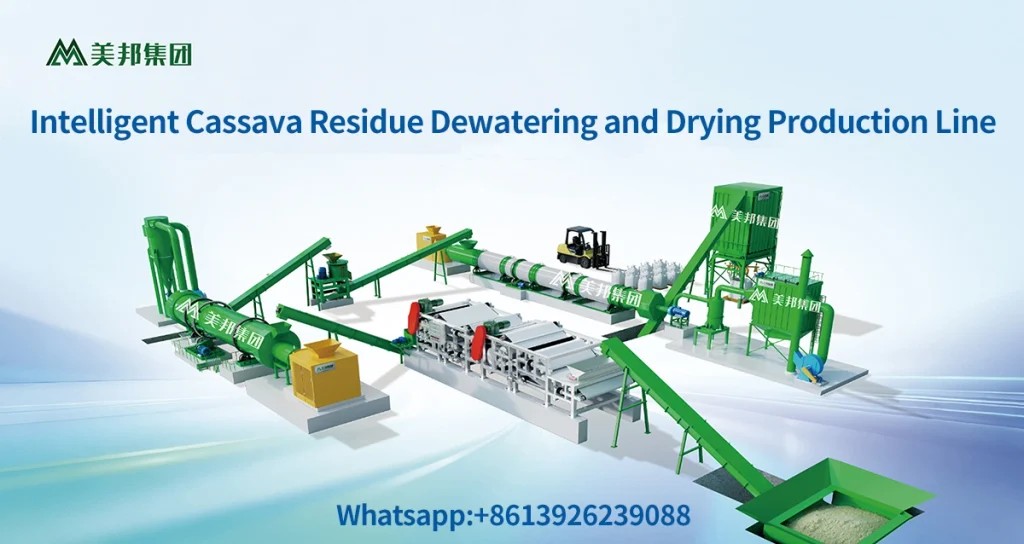
If you run a cassava starch plant, you know the problem. After starch extraction, you are left with piles of wet residue. It sits in the yard, starts to smell within days, attracts flies, and creates real environmental pressure. And you pay to deal with it. The Cassava Residue Dewatering Machine and Drying System helps you turn this waste into a valuable resource.
Most plants simply pile it up or sell it cheap. That is a waste, because cassava residue is not garbage. It is a raw material waiting for the right equipment.
The core problem is water. Fresh cassava residue comes out at around 85% moisture. At that level it is heavy, unstable, and expensive to transport. Nobody wants it, and it ferments fast.
The solution is a two-step process: mechanical dewatering first, then thermal drying.
Step 1: Cassava Residue Dewatering
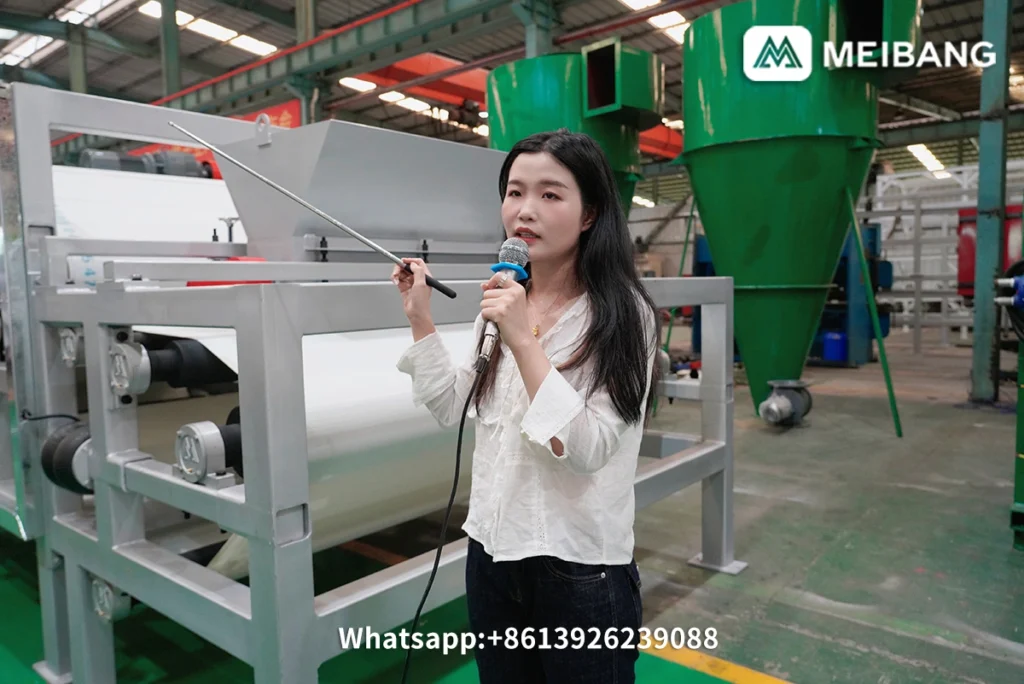
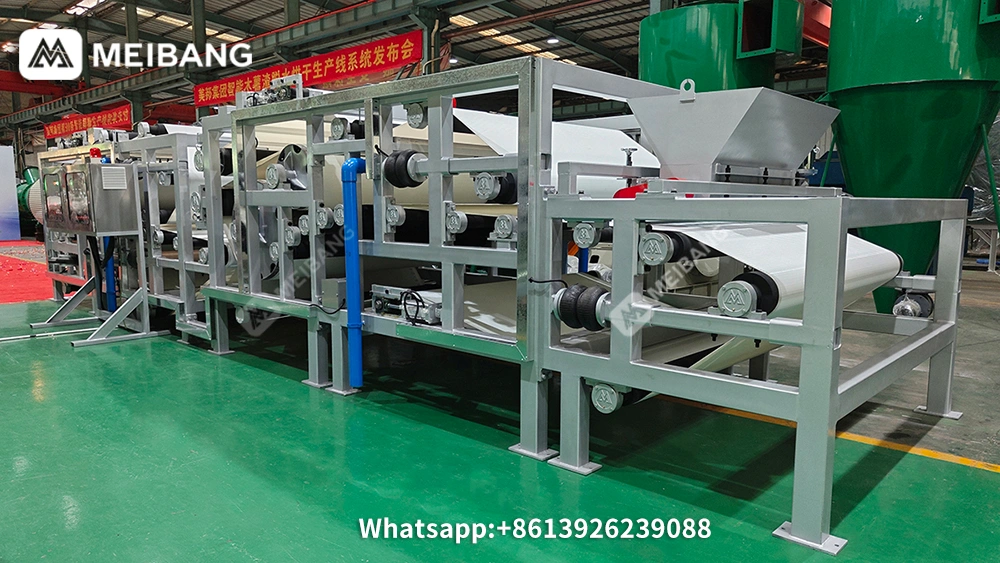
A Cassava Pulp Dewatering Machine uses a double-head high-efficiency press to squeeze free water out of the pulp. In a typical setup, moisture drops from about 85% to around 65%. This step is mechanical, so it is cheap to run. Removing water by pressing instead of heating is always the lower-cost option, and it takes a large load off the dryer downstream.
Step 2: Drying and Crushing
The dewatered pulp then enters a Cassava Residue Dryer. Here the material is dried to roughly 50% moisture, then crushed and broken up to increase surface area, and fed back into the dryer a second time. The final output is cassava residue at below 20% moisture.
That second pass matters. Wet pulp tends to clump. If you dry it in one go, the outside dries while the inside stays wet. Crushing and re-drying gives you an even, stable product. A well-designed Cassava Residue Drying System also controls the drying temperature carefully, which prevents the residue from scorching or burning. Burnt residue loses value and creates a fire risk, so temperature control is not a small detail.
Step 3: Dust Control
Dry cassava residue generates dust. Fine organic dust in a hot dryer is a real explosion hazard, so a complete Cassava Dregs Processing Line should always include a dust collection system. This protects your workers, protects the plant, and keeps the working area clean enough to pass an inspection.
What You Get at the End
Dried cassava residue at under 20% moisture is a saleable product. It can go into:
- Animal feed (a common use, especially as a partial corn or cassava replacement in ruminant feed)
- Organic fertilizer, either directly or after composting
- Biomass fuel, as a low-cost solid fuel for boilers
- Cat litter raw material, which is a growing market for cassava-based absorbent products
The value difference is significant. Wet residue is a disposal cost. Dry residue is a product. For many starch plants, the payback on a Low Energy Cassava Dryer comes from avoided disposal fees, avoided fines, and new product revenue combined.
Choosing Equipment
Three things decide whether a line works well for you:
- Capacity matched to your starch output. Residue volume follows starch production. Size the dewatering press and dryer together, not separately.
- Actual energy consumption per ton of water removed. Ask for figures based on your starting moisture, not lab conditions. A true Low Energy Cassava Dryer should show you the numbers.
- Safety systems. Dust collection, temperature monitoring, and spark detection are not optional.
Wet cassava residue is a headache only when you have no system for it. With dewatering, drying, crushing and dust control working together, it becomes one of the easier wins in your plant: less waste, less smell, less cost, and a new product line.