

The cassava processing industry produces large quantities of cassava residue every day. After starch extraction, the remaining cassava pulp still contains a high amount of water, making it difficult to transport, store, and utilize efficiently. For cassava starch factories, finding a practical way to reduce moisture and improve the value of this by-product has become increasingly important.
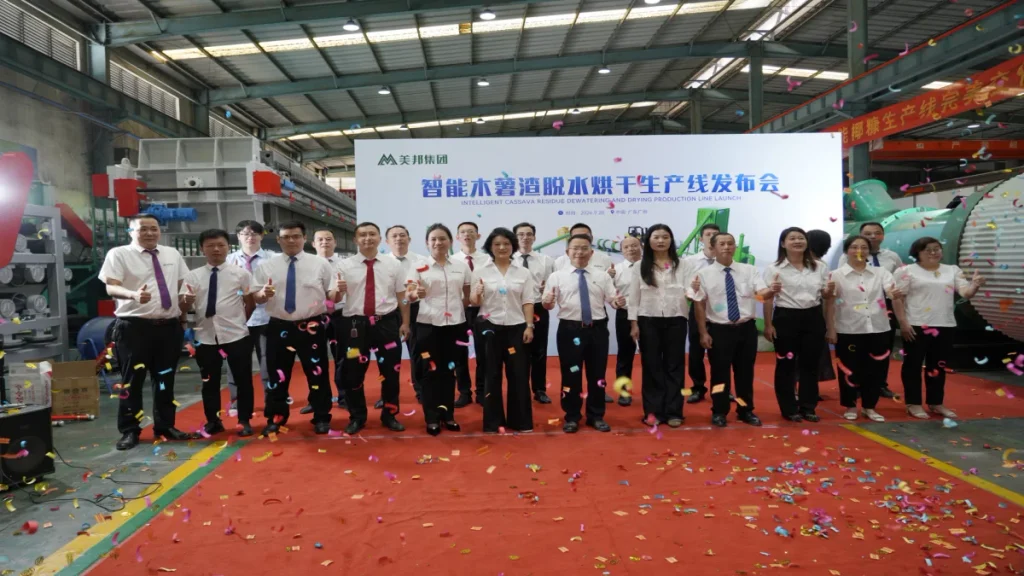
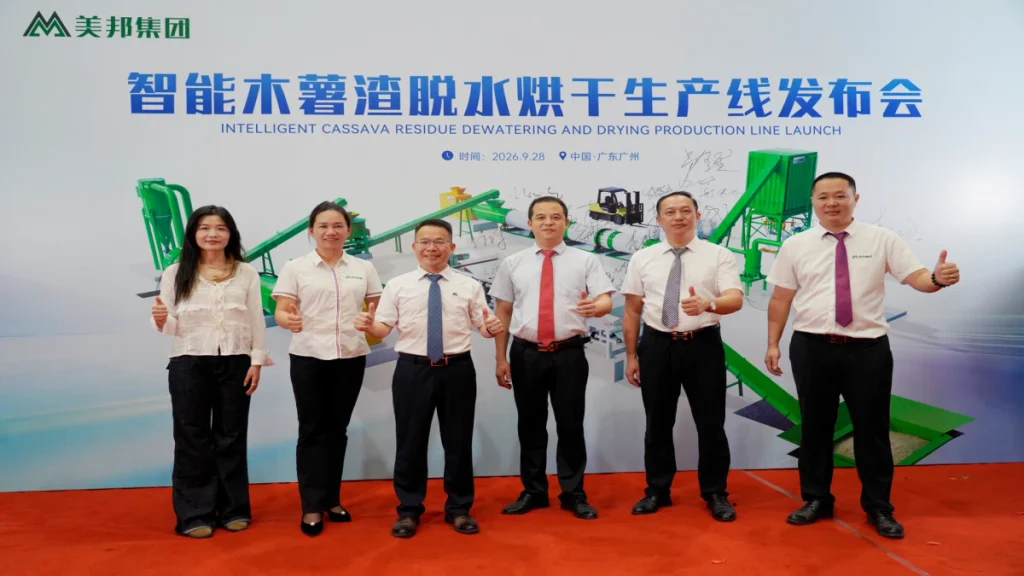
To address this challenge, Meibang has developed what it describes as the industry’s first intelligent cassava residue dewatering and drying line. The system combines mechanical dewatering with drying technology to provide a continuous solution for processing high-moisture cassava residue.
Rather than treating dewatering and drying as two separate processes, the new production line integrates them into a connected system. This approach can reduce the moisture content of fresh cassava residue before drying, lowering the load on the drying system and making the overall process more efficient.
Why Cassava Residue Dewatering Matters
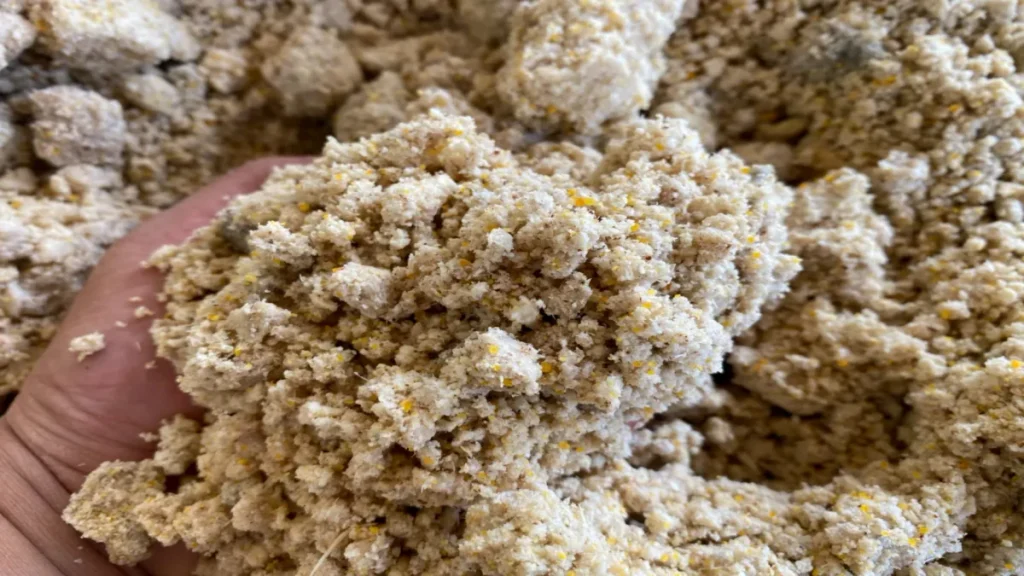
Fresh cassava residue is usually wet and bulky after starch extraction. Its high moisture content creates several practical problems for cassava processing plants.
First, transporting wet residue means transporting a large amount of water. This increases transportation costs and makes long-distance handling less economical.
Second, wet cassava residue is difficult to store. If it remains in a high-moisture condition for too long, fermentation and deterioration can occur. This limits the time available for transportation and further processing.
Third, directly sending high-moisture cassava residue into a dryer requires considerable thermal energy. A large part of the energy is consumed simply to evaporate water.
This is why mechanical dewatering is an important step before drying.
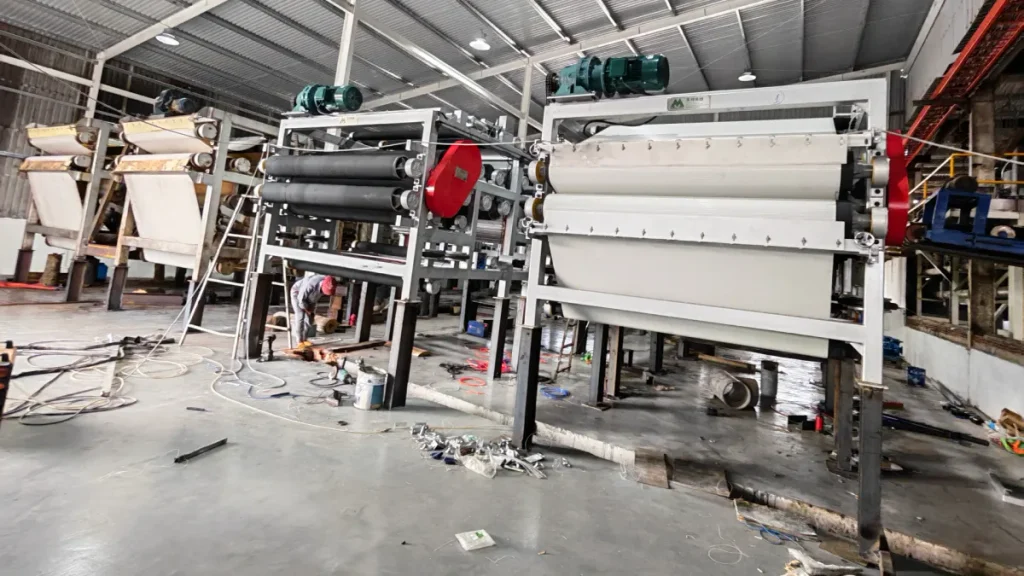
A suitable cassava residue dewatering machine can mechanically remove a significant amount of free water from the residue before it enters the thermal drying stage. Mechanical dewatering generally requires less energy than evaporating the same amount of water through thermal drying.
The result is a more reasonable combination of mechanical and thermal processing.
From Cassava Residue to a Processable By-Product
The basic concept of the new system is straightforward:
Cassava residue → Mechanical dewatering → Thermal drying → Dried cassava residue
The first stage uses mechanical force to remove water from the fresh residue. Depending on the characteristics of the material and the required final moisture content, the dewatered material can then be transferred to the drying system.
This two-stage approach is particularly useful because cassava residue is not simply a slurry. It contains fine particles, fiber, and organic matter, which can make conventional liquid-solid separation methods less suitable for continuous large-scale processing.
The dewatering equipment is therefore designed specifically around the physical characteristics of cassava residue.
After mechanical dewatering, the material enters the drying stage. By reducing the amount of water before drying, the dryer can focus more of its thermal energy on the remaining moisture.
This creates a complete cassava residue drying line rather than a standalone dewatering machine.
An Integrated Intelligent Production Line
One of the main differences between a single machine and a complete production line is process coordination.
In a traditional setup, a factory may purchase separate dewatering and drying equipment and then connect the machines manually. Operators may need to monitor material feeding, moisture changes, conveying, and drying conditions at different points in the process.
The intelligent line developed by Meibang takes a more integrated approach.
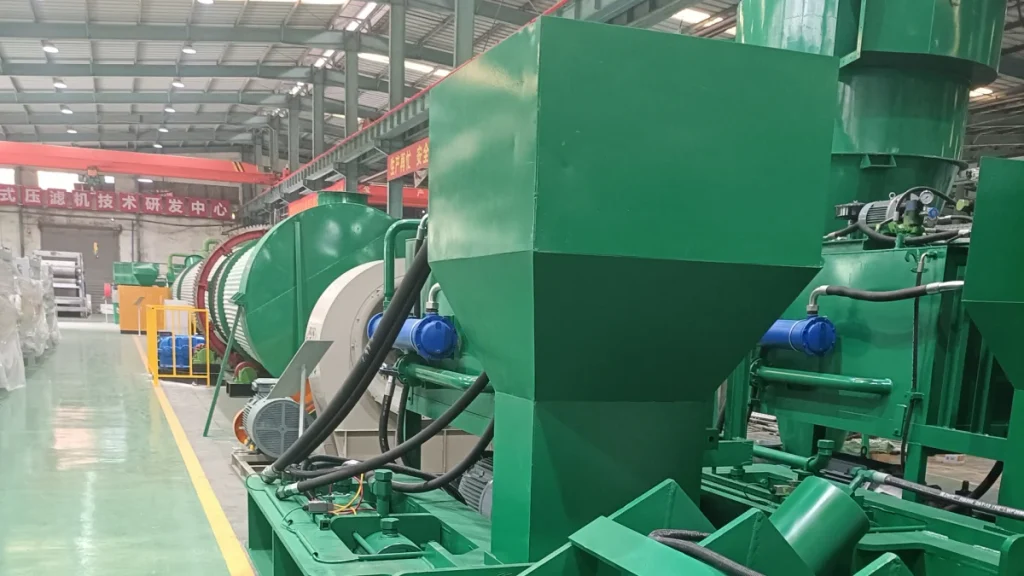
The dewatering section, conveying system, drying section, and related equipment are designed to work as one production system. Process parameters can be monitored and adjusted according to production requirements.
For a large cassava starch factory, this can simplify operation and reduce the need for frequent manual intervention.
The goal of intelligent production is not simply to add more automation. More importantly, the equipment should work together according to the characteristics of the material and the requirements of the final product.
Designed for Cassava Processing Plants
Cassava residue is often treated as a low-value by-product of starch production. However, its organic content and fibrous structure mean that it can potentially be further processed rather than simply discarded.
The economics depend heavily on local conditions, including the scale of the starch factory, transportation distance, available energy sources, final product requirements, and local markets.
For a cassava starch factory located close to large amounts of cassava raw material, processing the residue on site can provide several advantages.
The residue does not need to be transported in its original high-moisture condition. Instead, water can first be removed mechanically, followed by drying when necessary.
This can reduce the weight and volume of the material that needs to be transported and create more options for subsequent utilization.
For this reason, a cassava residue dewatering machine can be useful not only as an individual piece of equipment, but also as the first stage of a complete residue processing system.
Mechanical Dewatering Before Drying
Drying is often one of the most energy-intensive parts of a high-moisture material processing line. Removing water mechanically before thermal drying is therefore an important principle in many industrial processes.
The same principle applies to cassava residue.
Instead of attempting to remove all the moisture through heat, the cassava residue dewatering and drying line uses mechanical dewatering first and thermal drying afterward.
This combination allows each technology to perform the task it is best suited for.
The dewatering machine removes free water mechanically.
The dryer then removes the remaining moisture to reach the required final condition.
This is particularly important when processing large quantities of cassava residue. Even a reduction in the amount of water entering the dryer can have a significant impact on the required drying capacity and energy consumption.
What Makes the New Line Different?
The development of the intelligent cassava residue processing line is based on a simple idea: cassava residue should be treated as a processable material rather than simply as waste.
The new system focuses on three areas.
First, continuous processing.
Cassava residue can be processed continuously from dewatering through drying, making the system suitable for industrial-scale cassava starch plants.
Second, process integration.
The dewatering and drying sections are designed as parts of the same production system instead of completely independent machines.
Third, automation.
Automated control and coordinated equipment operation can reduce manual intervention and make the production process easier to manage.
These features are especially relevant for large cassava processing projects where production capacity, operating stability, and labor requirements are important considerations.
A New Approach to Cassava Residue Utilization
The growing cassava starch industry is generating increasing quantities of processing residues. Managing these residues efficiently is becoming an important part of modern starch factory design.
For some factories, the solution may simply be to dispose of the residue locally. For others, however, drying and further utilization may provide a more practical option.
The right solution depends on the material, production capacity, final moisture requirement, and intended use.
Meibang’s approach is to start with the most important processing challenge: moisture.
By combining a cassava residue dewatering machine with a drying system, the new production line provides a complete route from wet cassava residue to a dried, easier-to-handle material.
This can also give cassava starch producers greater flexibility when considering transportation, storage, and downstream utilization.
From a Dewatering Machine to a Complete Solution
Meibang has traditionally focused on industrial dewatering equipment for high-moisture materials. The development of the intelligent cassava residue dewatering and drying line represents an extension of this equipment expertise into a complete processing solution.
For customers who only need to reduce the moisture of cassava residue, an individual dewatering machine may be sufficient.
For large cassava starch factories that need both moisture reduction and drying, a complete cassava residue drying line can provide a more integrated solution.
The equipment configuration can be developed according to the customer’s raw material characteristics, processing capacity, moisture requirements, available plant space, and energy conditions.
This is important because cassava residue is not identical from one factory to another. The material can vary depending on the cassava variety, starch extraction process, fiber content, and production conditions.
A practical solution therefore needs to be designed around the actual material rather than based on a standard configuration.
Looking Ahead
The launch of the industry’s first intelligent cassava residue dewatering and drying line marks another step toward more efficient utilization of cassava processing by-products.
For cassava starch producers, the value of residue processing is not only about waste reduction. It is also about reducing unnecessary water transportation, improving material handling, and creating additional possibilities for downstream utilization.
Mechanical dewatering provides the first step. Drying provides the next. Intelligent process integration connects the two.
As cassava processing plants become larger and more automated, integrated residue processing systems may become an increasingly important part of modern factory design.
Meibang will continue to develop equipment and complete solutions for high-moisture organic materials, helping cassava processors turn wet residue into a more manageable and potentially more valuable by-product.
If you are planning a cassava residue dewatering project, upgrading an existing cassava starch factory, or looking for a complete cassava residue dewatering and drying line, Meibang can develop an equipment configuration based on your material and production requirements.
Contact Meibang to discuss your cassava residue processing project and request a customized solution.